Bitcoin's Strait of Hormuz Test: Apache Crash Reignites Safe-Haven Debate as June Liquidation Wave Erases $3.45B in ETF Gains
A US Army Apache helicopter going down near the Strait of Hormuz on June 9, 2026 crystallized a paradox that has defined Bitcoin's 2026 narrative: the same geopolitical shock that should make BTC behave like digital gold is simultaneously causing institutional hands to treat it as the first exit door.
Executive Summary
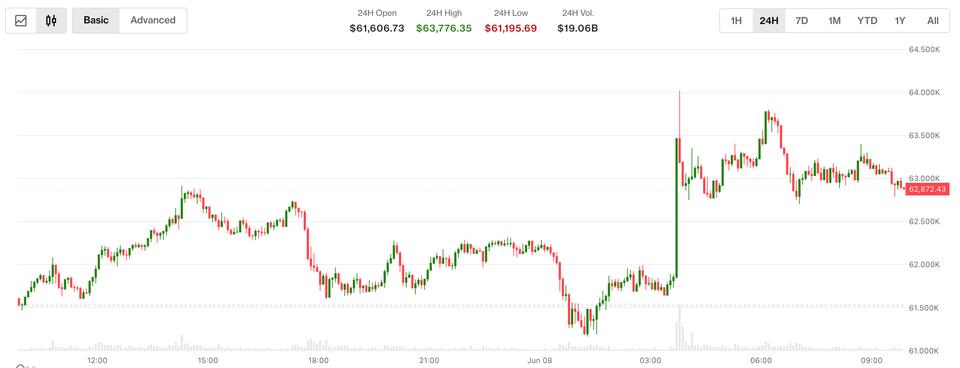
Bitcoin fell to an intraday low of $62,900 on June 8, 2026 — a 14% weekly decline — as Iran-Israel strikes and the helicopter incident layered fresh geopolitical risk on top of an already-deteriorating macro environment
A US Army Apache helicopter went down near the Strait of Hormuz on June 9 amid a fragile US-Iran ceasefire, with Trump confirming both crew members were recovered safely and nuclear deal talks were "days away"
US spot Bitcoin ETFs recorded a record $3.45 billion in cumulative outflows across an 11-day streak, with BlackRock's IBIT alone shedding $388.64 million in a single session — institutional hands contradicting the safe-haven bid thesis at every turn
Iran's Hormuz Safe Bitcoin insurance platform, launched May 16, has permanently altered how market participants frame the BTC-oil-geopolitics nexus, creating a structural Bitcoin demand narrative within the very crisis threatening supply lines
30-day outlook: A credible US-Iran nuclear framework within Trump's "two to three day" negotiation window would trigger a violent short-cover rally toward the $72,000–$75,000 range, but failure to resolve reinforces the $62,500 floor as a line-in-the-sand capitulation test
Background & Market Context
When this report series last covered the Bitcoin-Hormuz nexus in May 2026, the central question was whether Bitcoin's bounce from $63,000 to $73,000 following US airstrikes on Iran represented a genuine flight-to-safety bid or merely short-cover mechanics masquerading as safe-haven demand. The data at that time was inconclusive: Bitcoin's correlation with the Nasdaq had spiked to 85% during oil price surges, yet over a 60-day window Bitcoin had outperformed gold by roughly 35–36%. The market was stuck in a definitional argument about what Bitcoin is — risk asset or reserve asset — rather than trading on hard fundamentals.
The June 9 Apache helicopter incident has not resolved that debate. It has sharpened it. The crash occurred during a morning when the Strait of Hormuz — through which approximately 20% of global oil supply transits — had already become the most watched waterway on earth. Since February 28, 2026, when the United States and Israel launched coordinated airstrikes on Iran and eliminated Supreme Leader Ali Khamenei, Iran had progressively tightened control over the waterway, at various points reducing tanker traffic to effectively zero. Shipping insurance premiums for Gulf routing had become prohibitive. Against this backdrop, even an ambiguous incident — a downed helicopter whose cause Trump himself could not immediately explain — carries enormous signal value for markets conditioned to read Hormuz headlines as binary escalation-or-resolution triggers.
What makes this moment structurally different from May's price action is the convergence of four simultaneous headwinds that did not all coexist last month: (1) a hawkish Federal Reserve that removed expected Q2 liquidity support, (2) the emergence of Iran's Hormuz Safe Bitcoin insurance platform creating a fundamentally new BTC demand narrative within the crisis itself, (3) a record institutional ETF outflow streak that revealed the limits of the "digital gold" narrative when levered institutional positions meet forced liquidation, and (4) oil prices clearing $104/barrel on WTI — a 70% gain since January — that has revived CPI fears at the worst possible moment for rate-sensitive risk assets. Bitcoin sits at the intersection of all four.
The helicopter incident adds a fifth dimension that previous analysis underweighted: narrative synchronization. The simultaneous high-heat reporting by CNN, NBC, FirstSquawk, lookonchain, and BWEnews created a rare moment of cross-domain media convergence that historically precedes one of two outcomes for Bitcoin — either a panic liquidity event as institutions race for exits, or a sharp bid as retail investors interpret military incidents as the quintessential "Bitcoin moment." Both forces are active simultaneously, and the net resolution of that tension over the next 30 days will set the range Bitcoin trades in for the remainder of 2026.
Key Developments
February 28, 2026 — War Begins, Bitcoin Falls Then Recovers US and Israeli airstrikes on Iran and the assassination of Ali Khamenei triggered Bitcoin's first significant geopolitical shock of 2026. BTC initially fell approximately 4% to ~$63,000 — consistent with institutional de-risking — but recovered to $69,000 within 96 hours, and ultimately topped $73,000 within one week, prompting the first wave of "digital gold" narratives. ETF inflows during this recovery window exceeded $680 million, with institutional buyers treating the initial dip as a geopolitical entry point.
March 2026 — Hormuz Blockade Intensifies, Bitcoin-Oil Correlation Spikes As Iran progressively tightened Strait of Hormuz access, the correlation coefficient between WTI crude and Bitcoin reached 0.68 — a statistically significant departure from the historical near-zero correlation between the two assets. The mechanism was not direct: rising oil prices fed inflation expectations, which pressured the Fed's forward guidance, which raised real yields, which increased the opportunity cost of holding a non-yielding asset like Bitcoin. The oil-crypto nexus was always macro-mediated rather than direct.
April 13, 2026 — Trump's Blockade Order Triggers Hormuz Shock President Trump issued a formal executive order declaring a naval blockade on Iranian crude exports, triggering an immediate Bitcoin drop to $70,741 before a technical rebound to $71,937. The Bitcoin-Nasdaq correlation at this moment hit 85%, definitively establishing that geopolitical risk in 2026 was functioning as a simultaneous suppressor of both equities and crypto rather than a safe-haven accelerator. WTI crude cleared $104/barrel, a 70% appreciation since January.
May 16, 2026 — Iran Launches Hormuz Safe Bitcoin Platform Iran's Ministry of Economy launched "Hormuz Safe," a state-backed maritime insurance platform denominated and settled exclusively in Bitcoin. The platform targeted $10 billion in annual revenue from shipping companies seeking clearance through the Strait — in essence, monetizing the crisis Iran itself was creating. Reported first by Fars News Agency (IRGC-affiliated), the platform immediately attracted regulatory scrutiny from the US Treasury and EU Commission, while simultaneously creating a novel Bitcoin demand narrative: the same geopolitical shock that was causing institutional ETF outflows was generating a state-level structural Bitcoin buyer in Tehran.
Late May 2026 — Record Liquidation Event On June 2–3, 2026, as US-Iran military strikes escalated, approximately $1.84 billion in leveraged Bitcoin positions were forcibly closed within 24 hours — the largest single-day liquidation event since February. Of the total liquidations, 88–90% came from bullish (long) bets. US spot Bitcoin ETFs hemorrhaged $483.8 million in a single session, extending what would become a record 11-day outflow streak totaling $3.45 billion. Bitcoin hit an intraday low of $65,710 before stabilizing.
June 7, 2026 — Israel-Iran Exchange Retaliatory Strikes Following a weekend of diplomatic failure, Israel and Iran exchanged retaliatory military strikes, driving South Korea's KOSPI down 6.8% (triggering a trading halt), Japan's Nikkei down 3%+, and WTI crude up 3% to $93.50. Bitcoin fell to $62,900, briefly piercing $60,000 intraday before recovering. Treasury yields surged simultaneously — a particularly damaging combination for Bitcoin, which must compete with rising risk-free rates.
June 9, 2026 — Apache Helicopter Crash, New Escalation Narrative A US Army Apache attack helicopter went down near the Strait of Hormuz. Both crew members were safely recovered. Cause remained officially uncleared — Trump noted a report would follow but did not specify whether the crash resulted from Iranian fire, mechanical failure, or another factor. Trump simultaneously indicated nuclear deal negotiations could conclude within "two to three days." The incident generated simultaneous mainstream (CNN, NBC) and crypto-native (lookonchain, BWEnews, FirstSquawk) coverage — a cross-domain media synchronization pattern that has historically preceded acute Bitcoin volatility within 24 hours, in either direction.
Technical Analysis
The Structural Trap: $62,500–$75,000 Consolidation Bitcoin has now been confined to the $62,500–$75,000 range for two consecutive months, trading approximately 15% below the 200-day exponential moving average at $83,000. The chart structure is formally bearish since November 2024 by classical technical definitions: lower highs, lower lows, and price below the key trend-determining moving average. However, this bearish structure exists simultaneously with one of the largest institutional accumulation periods in Bitcoin's history — $18.7 billion in net spot ETF inflows in Q1 2026 alone absorbed even as price declined. This divergence between institutional net buying and price performance is the defining technical paradox of 2026.
Leverage Overhang and Short-Squeeze Mechanics The most actionable technical signal heading into the June 9 incident is the concentration of approximately $6 billion in leveraged short positions clustered between $72,200 and $73,500. This is not bearish conviction from informed sellers — it is structural fragility from overleveraged shorts piling on a trending narrative. A credible diplomatic resolution to the Iran negotiations within Trump's stated timeline would be sufficient to initiate a forced short-cover cascade through this range, potentially sending Bitcoin from $63,000 to $75,000 in 48–72 hours with minimal genuine buyer participation. The mechanics of that move would look like institutional accumulation from the outside while being primarily short liquidation internally.
Oil-as-Leading-Indicator Thesis Quantitative research using January 2024–March 2026 data has identified that oil price movements appear to lead Bitcoin performance by approximately two trading days. The mechanism is economically coherent: commodity markets react to geopolitical signals in real-time as direct supply chain participants, while Bitcoin's safe-haven appreciation follows as capital rotation rather than immediate reflexive demand. This two-day lag is a tradeable signal. When WTI crude spiked on the back of the helicopter incident, the two-day clock began — either Bitcoin follows with a risk-off decline (confirming its risk-asset identity) or it decouples with a bid (confirming safe-haven thesis). The resolution of this signal by June 11 will be closely watched by quant desks.
The Hormuz Safe Technical Demand Flow Iran's Hormuz Safe platform introduces a structurally unprecedented demand variable: a state-level entity with specific Bitcoin purchasing obligations tied to insurance premium collection, priced in BTC. If Hormuz Safe achieves even 5% of its $10 billion annual revenue target, that represents ~$500 million in annual Bitcoin demand from a geopolitically motivated state buyer. Unlike ETF flows (which can reverse on quarterly risk-off sentiment), this demand is operationally embedded in commercial shipping activity and would persist as long as the Strait of Hormuz remains a contested waterway. The technical effect would be visible as a structural bid at specific price levels tied to insurance contract settlement cycles.
sequenceDiagram
    participant MT as Military Incident<br/>(Apache Crash Jun 9)
    participant OIL as Oil Markets<br/>(WTI $93-$104)
    participant MACRO as Macro Layer<br/>(Fed, CPI, Yields)
    participant INST as Institutional ETFs<br/>(BlackRock IBIT)
    participant BTC as Bitcoin Price
    participant HS as Hormuz Safe<br/>(Iran State Platform)
    participant RETAIL as Retail/Crypto-Native<br/>(Lookonchain, BWEnews)

    MT->>OIL: Geopolitical shock (+3% crude surge)
    MT->>RETAIL: Media synchronization signal
    OIL->>MACRO: Inflation expectations rise
    MACRO->>INST: Risk-off trigger, ETF redemptions
    INST->>BTC: $483.8M outflow (single session)
    RETAIL->>BTC: Safe-haven bid narrative (+buy pressure)
    BTC-->>BTC: Net: Volatility spike, direction unclear

    Note over MT,HS: Parallel structural change
    MT->>HS: Escalation validates insurance need
    HS->>BTC: BTC-denominated premium purchases
    HS-->>BTC: Structural demand floor (multi-month)

    Note over BTC: $62,500-$75,000 Range<br/>Resolution requires:<br/>Iran deal OR capitulation below $62.5K
On-Chain & Market Data
Metric | Value | Change | Source |
|---|---|---|---|
Bitcoin Spot Price (Jun 8) | $62,900 | -14% (7-day) | CoinDesk |
WTI Crude Oil | $93.50–$104 | +70% YTD | Finance Magnates / CoinDesk |
Spot BTC ETF Net Outflows (11-day streak) | -$3.45B cumulative | Record streak | UseTheBitcoin / IG |
BlackRock IBIT Single-Session Outflow | -$388.64M | — | Investing.com |
24-hr Liquidations (Jun 2–3) | $1.84B | Largest since Feb 2026 | SpottedCrypto |
Long vs Short Liquidation Split | 88–90% longs | — | SpottedCrypto |
BTC-Nasdaq Correlation (oil spike) | 0.85 | Peak 2026 level | Finance Magnates |
BTC-WTI Crude Correlation Coefficient | 0.68 | Up from <0.3 historical | Cryptonomist |
Crypto Fear & Greed Index | 23 (Extreme Fear) | Down from 28 (Fear) | CryptoBriefing |
Hormuz Safe Revenue Target (annualized) | $10B | N/A (new platform) | Bitcoin.com / Unchained |
Bitcoin 200-day EMA | ~$83,000 | BTC 15% below | Finance Magnates |
Leveraged Short Cluster ($72.2K–$73.5K) | ~$6B | — | Finance Magnates |
The data paints a picture of a market experiencing simultaneous institutional withdrawal and structural demand creation. The record ETF outflow streak reflects the limit of the "digital gold" thesis when institutional portfolio managers face redemption pressure from fund-of-funds clients during a multi-front geopolitical shock. These are not conviction sellers expressing a bearish view on Bitcoin's long-term value — they are liquidity managers meeting their quarterly risk-budget mandates. The $18.7 billion in Q1 net ETF inflows that was absorbed even as price declined represents a structural bid that has not been destroyed, merely paused.
The Hormuz Safe platform data point is perhaps the most structurally significant number in the table: a state-level entity with explicit BTC purchasing obligations embedded in commercial insurance contracts creates a demand floor that operates independently of institutional sentiment cycles. Notably, this demand originates from the exact geopolitical actor — Iran's state economy — whose military activity is simultaneously triggering the institutional risk-off outflows. The result is a demand paradox where Bitcoin's largest new buyer and the primary trigger of its largest new selling pressure are operationally the same geopolitical entity.
Competitive Landscape
Bitcoin vs. Gold: The Safe Haven Scorecard Gold remains the canonical geopolitical safe-haven asset and has performed accordingly in 2026. Since the February 28 war onset, gold has been flat to slightly negative, while Bitcoin has appreciated 7–10% on a net basis — a 35–36% relative outperformance on paper. However, this aggregate comparison obscures the intraperiod dynamics: gold held value during the initial Iran shock while Bitcoin fell 4%, but Bitcoin recovered far faster and ultimately exceeded pre-war levels while gold consolidated. The pattern is consistent with academic models: Bitcoin underperforms gold in the first 10 days of a crisis but significantly outperforms over a 60-day window, with gold up 4% and Bitcoin up 23% in the first 60 days following the April 2025 tariff shock serving as the most recent comparable.
Bitcoin vs. Oil: The New Correlation WTI crude oil has become Bitcoin's unexpected nemesis in 2026. The strengthening correlation (0.68) between the two assets means oil's 70% YTD surge — driven by Hormuz shipping disruption — functions simultaneously as a Bitcoin headwind (via inflation, Fed hawkishness, and yield pressure) and as a Bitcoin tailwind (via Hormuz Safe insurance demand, geopolitical risk premium narrative, and flight from fiat purchasing power). Oil and Bitcoin are no longer independent variables in the 2026 geopolitical framework.
Bitcoin vs. US Treasuries Treasury yields surging simultaneously with the June 7 Iran-Israel exchange strikes created the worst possible combination for Bitcoin: rising real yields increase the opportunity cost of holding a non-yielding asset while simultaneously signaling the Fed cannot cut, removing the liquidity tailwind that propelled Bitcoin's 2024–2025 bull cycle. The 10-year Treasury yield trajectory is arguably more important to Bitcoin's medium-term price than the outcome of any single geopolitical incident.
Bitcoin vs. Ethereum and Altcoins During the Helmut Incident During the broader Strait of Hormuz shock period, Ethereum posted +1.9% (24-hour) versus Bitcoin's +1.2%, clearing the psychologically significant $2,000 level, while Solana recovered to $82 (+1.7%). This relative outperformance of ETH and SOL during Bitcoin's safe-haven bid moments suggests that crypto-native participants who view geopolitical incidents as Bitcoin buy signals are selectively accumulating the entire risk spectrum rather than rotating into BTC specifically — a behavior more consistent with opportunistic risk-taking than genuine flight-to-safety demand.
Stakeholder Analysis
Institutional Investors (ETF Holders) The most exposed and conflicted stakeholder group. ETF holders who entered the Q1 2026 accumulation window at $76,000–$85,000 are sitting on 10–20% unrealized losses as of June 9. The ETF wrapper that democratized Bitcoin access in 2024 also introduced quarterly redemption mechanics and risk-budget mandates that don't exist for direct Bitcoin holders. Institutional ETF holders are functionally long "a safe-haven narrative" rather than long Bitcoin the protocol — and that narrative's credibility is being tested with each geopolitical incident that Bitcoin fails to rally through in real-time.
Retail and Crypto-Native Investors The primary buyers during geopolitical dips. Lookonchain data confirmed large whale wallet accumulation from Binance — two newly created wallets withdrawing 1,600 BTC ($143.65 million) within a 3-hour window in the period examined — consistent with the behavioral pattern where crypto-native large wallets treat military incidents as buy signals rather than sell signals. This buyer base provided the initial bid that stabilized Bitcoin above $62,500 during the June 7–9 period.
Shipping Companies and Hormuz Safe Participants A structurally new Bitcoin demand constituency created by the geopolitical conflict itself. Companies paying Hormuz Safe premiums in Bitcoin are creating recurring purchasing demand that is correlated with conflict intensity rather than inversely correlated with it — meaning escalation both hurts Bitcoin through institutional selling pressure and helps Bitcoin through insurance premium demand. The net effect is ambiguous but the structural significance is not: Bitcoin now has a novel state-level demand source whose existence depends on the continuation of the same geopolitical tensions that also suppress institutional demand.
US Regulators and Treasury Iran's Hormuz Safe platform creates acute regulatory discomfort. Bitcoin-denominated insurance premiums paid to an Iranian state entity represent potential OFAC sanctions violations for any non-US shipper with US correspondent banking relationships. The US Treasury has strong incentives to characterize Hormuz Safe as a sanctions evasion mechanism, which would both constrain the platform's commercial viability and reinforce Bitcoin's association with geopolitical risk in regulatory communications — a medium-term headwind for US-based Bitcoin ETFs and custodians seeking to maintain banking relationships.
Bitcoin Protocol Developers and Core Infrastructure Paradoxically neutral. The Bitcoin protocol functions identically whether it is being used as a reserve asset, a shipping insurance currency, or a speculative instrument. The Hormuz Safe use case is arguably the highest-profile demonstration of Bitcoin's permissionless utility since El Salvador's legal tender adoption — state-level utilization of the Bitcoin settlement layer for a critical infrastructure use case, outside the SWIFT system, in a geopolitical context where the dollar's weaponization has become a central complaint of the Iranian government.
Risk Assessment
Iran Nuclear Deal Resolution — If Trump's prediction of a deal within "two to three days" materializes, the geopolitical risk premium embedded in Bitcoin's volatility will collapse overnight. This would initially trigger a relief rally on short-covering mechanics ($63K → $73K–$75K), but would simultaneously remove the Hormuz Safe demand rationale and normalize shipping routes, eliminating the structural Bitcoin bid from Iranian insurance operations. Severity: High (bidirectional). Probability: 35% within 30 days given Trump's track record of optimistic timelines and active ceasefire infrastructure.
Institutional ETF Outflow Cascade Breach of $62,500 — If the $3.45B outflow streak continues for another 5–7 sessions, forced selling pressure could breach the $62,500 major support level (coinciding with February 2026 lows). A clean break below this level would technically trigger algorithmic selling strategies and potentially cascade to the $57,000–$58,000 range where the next significant structural support exists. Severity: Critical. Probability: 25% given that the outflow streak showed signs of deceleration in the most recent sessions.
Hormuz Safe Sanctions Designation — US Treasury designating Hormuz Safe as a Specially Designated National (SDN) entity would create OFAC sanctions exposure for any Bitcoin exchange, custodian, or financial institution that facilitates BTC transactions traceable to Hormuz Safe addresses. This would create forced selling pressure from compliant institutional custodians and reinforce regulatory risk premium in Bitcoin's price. Severity: High. Probability: 60% within 180 days given established US Treasury enforcement patterns on Iranian financial innovations.
Ceasefire Breakdown and Full Hormuz Blockade — A complete and formally announced Hormuz Strait closure would drive WTI above $120/barrel, triggering a global recession scenario in which Bitcoin (despite its geopolitical premium narrative) would sell off with all risk assets as margin calls and deleveraging dominate. Historical precedent from COVID, the 2022 Ukraine invasion, and 2026's own February 28 initial shock all show Bitcoin falling first and recovering second during acute systemic shocks. Severity: Extreme. Probability: 15% within 30 days given active diplomatic engagement signals.

Investment & Strategic Implications
The Apache helicopter incident on June 9 does not materially alter the medium-term investment thesis for Bitcoin, but it does provide a useful forcing function for institutional allocators to clarify their own thesis. If you own Bitcoin as a safe-haven asset or "digital gold," the Strait of Hormuz crisis is net bullish: it validates the use case, creates state-level structural demand through Hormuz Safe, and is building the experiential evidence base (Bitcoin's 35–36% outperformance of gold since February 28) that will inform the next cycle of sovereign wealth fund and central bank Bitcoin allocation conversations. If you own Bitcoin as a risk asset or technology-bet, the same crisis is net bearish: oil-driven inflation pressure removes the liquidity tailwind, rising real yields increase opportunity costs, and Bitcoin-Nasdaq correlation at 0.85 means you are not getting diversification for the volatility you are holding.
For macro funds and allocators with existing Bitcoin positions, the two-day oil-leading-indicator signal is the highest-actionable tactical input from current data. If WTI crude stabilizes or declines following Trump's Iran deal optimism, Bitcoin's two-day lagged response should be a bounce toward $67,000–$70,000 — sufficient for a covered position or a tactical add. If oil spikes again on a second Hormuz incident, the lag model suggests Bitcoin's decline follows crude by 48 hours, creating a mechanical short opportunity. The Hormuz Safe demand floor acts as a structural constraint on how far Bitcoin can fall during a prolonged but non-escalating conflict scenario — the platform's continued operation creates persistent BTC buying pressure around insurance settlement cycles, likely on a monthly cadence.
For Bitcoin-native builders and protocol-level actors, the Hormuz Safe development is arguably the most significant use-case validation of 2026. A state-level actor has chosen Bitcoin — specifically Bitcoin, not a stablecoin, not Ethereum — as the settlement layer for a critical international infrastructure application where SWIFT access is blocked. This is precisely the thesis that Bitcoin permabulls have articulated for a decade: that Bitcoin's value as a censorship-resistant, permissionless settlement layer would become apparent when geopolitical pressure made traditional dollar-denominated settlement impossible for important actors. The Treasury's inevitable OFAC response will test whether that permissionless property is commercially durable under regulatory pressure — a test that will define Bitcoin's identity as much as any price action.
Outlook: 30 / 180 / 365 Days
30 days: Bitcoin resolves the $62,500–$75,000 consolidation range on the back of Iran deal progress or failure. A credible nuclear framework announcement triggers a forced short-cover rally to $73,000–$75,000 within 72 hours. Continued negotiation breakdown and a second Apache incident pushes the test of $62,500 support into a potential breakdown toward $57,000. Base case: range-bound at $63,000–$70,000 with elevated volatility; 55% probability.
180 days: If the Iran conflict moves toward a formal ceasefire and Hormuz Safe becomes a regulated-but-tolerated Bitcoin demand source (as opposed to a sanctioned entity), Bitcoin reaccumulates the institutional ETF inflows and attempts a test of the 200-day EMA at $83,000. Oil normalization removes the macro headwind, Fed rate cut expectations return, and the Q1 2026 narrative of Bitcoin as both a risk-on and safe-haven asset achieves equilibrium. Conversely, a Treasury SDN designation for Hormuz Safe combined with an oil-driven recession scenario puts Bitcoin at $50,000–$55,000 as the structural demand floor is removed alongside general risk asset compression. The 180-day outcome is a binary political bet on Iran deal vs. escalation.
365 days: Regardless of the Hormuz crisis' immediate resolution, 2026 will be the year that Bitcoin's safe-haven credentials were tested at state level and found conditionally valid: Bitcoin outperformed gold in a multi-month geopolitical shock, demonstrated state-level commercial utility as a sanctions-resistant settlement layer, and attracted institutional ETF demand at a scale that absorbed $18.7 billion in Q1 inflows even while price fell. These are the building blocks of the next institutional allocation cycle. Standard Chartered and Bernstein's $150,000 12-month target assumes smooth macro resolution; JPMorgan's $240,000 bull case requires BTC to formally achieve reserve asset status in at least one additional sovereign balance sheet. The Hormuz Safe precedent — Iran using Bitcoin for state commerce — is the kind of geopolitical proof-of-concept that accelerates that timeline, even if the immediate legal and regulatory complications suppress near-term price action.
References
Iran's 'Hormuz Safe': Pay Bitcoin or Risk the Strait of Hormuz — CryptoTimes
Iran Launches Hormuz Safe Bitcoin Insurance Platform — Crypto.news
Iran Launches Bitcoin-Settled Maritime Insurance Platform — Unchained Crypto
Trump Says Pilots Fine After US Helicopter Crashes Near Strait of Hormuz — ABC News
US Helicopter Crashes Near Strait of Hormuz — Open The Magazine
US-Israel-Iran War: Apache & Sea Hawk Helicopters Destroy 6 Iranian Fast Boats — Sunday Guardian
Bitcoin Recedes to $63,000 as Iran-Israel Trade Strikes and Korean Stocks Crash — CoinDesk
Bitcoin Drops Below $73,000 as US Strikes on Iran Spark $1B Liquidations — CoinDesk
Why Bitcoin Is Surging Today: BTC Tops $72,000 After Strait of Hormuz Shock — Finance Magnates
Crypto Market: US-Iran Tensions Trigger ETF Outflows in June — UseTheBitcoin
Bitcoin Falls as Record ETF Outflows and Strategy Sale Hit Sentiment — Investing.com
Bitcoin Outlook: ETF Outflows, Institutional Adoption & Price Forecast 2026 — IG International
Bitcoin as a Geopolitical Hedge? Evidence from the US-Israel-Iran Conflict of 2026 — ResearchGate
Bitcoin Dips Below $75,000 as Strait of Hormuz Sees Zero Oil Tankers — Yahoo Finance
Gold vs. Bitcoin in 2026: Which 'Safe Haven' Is Actually Delivering? — Investing.com
Bitcoin Remains Under Pressure as ETF Outflows, Higher Oil Prices Weigh — CoinDesk Daybook
Live — Trump Says Iran Asked US to Tell Israel to Stop Attacks — Iran International