Binance Bets on Private Equity's Last Frontier: SpaceX Pre-IPO Perps Signal CeFi's Boldest Product Pivot Yet
Binance's SPCXUSDT launch on May 21, 2026 marks the first time a Tier-1 centralized exchange has offered retail-accessible synthetic perpetual futures on a private company's IPO valuation — transforming how capital markets interface with the $13 trillion private equity ecosystem.
Executive Summary
Binance launched SPCXUSDT Pre-IPO Perpetual Contracts on May 21, 2026, tied to SpaceX's anticipated $1.75–2 trillion Nasdaq debut, giving 280+ million registered users synthetic exposure to what would be one of the largest IPOs in financial history
SpaceX filed its S-1 confidentially on April 1, 2026, targeting a June 12 Nasdaq listing under ticker SPCX at a $75 billion capital raise — creating an unprecedented price discovery window that crypto derivatives are rushing to fill
The product represents a structural expansion of CeFi beyond crypto-native assets, echoing the logic of tokenized equities but using synthetic perpetuals to sidestep private company share-transfer restrictions
Regulatory risk is acute: the product occupies an ambiguous intersection of commodity derivatives, synthetic securities, and private equity exposure — jurisdictions including the U.S. have no established framework, and Binance operates under a 2023 CFTC consent order
Within three days of Hyperliquid's pioneering SPCX-USDC contract (May 18), OKX, Binance, Crypto.com, and Trade.xyz all launched competing products, suggesting a platform land-grab that could entrench this product category before regulators respond
Background & Market Context
For decades, the asymmetry of private capital markets has been one of finance's most durable inequities: the most transformative companies — SpaceX, OpenAI, Anthropic — remain inaccessible to retail investors until the moment of IPO, by which time institutional allocations have already crystallized the majority of returns. Secondary markets like Forge Global, Hiive, and SharesPost partially address this gap, but their accredited-investor requirements, illiquid order books, and high per-share minimums (Forge's SpaceX price stood at $650.66 as of May 20, 2026) mean they serve a narrow constituency.
Crypto derivatives infrastructure is now attempting to bridge this gap through synthetic perpetuals — instruments that track valuations without ever touching underlying shares. This is not the same as tokenized equities, where blockchain representations of actual stock positions exist and carry both economic rights and the legal complications of private company transfer restrictions. Instead, pre-IPO perpetuals are cash-settled derivatives whose prices orbit private market data (tender offers, secondary trades, S-1 ranges) via oracle feeds and funding rate mechanisms. The distinction is critical from both a regulatory and structural standpoint: no share changes hands, no voting rights are conferred, and SpaceX itself is entirely uninvolved.
The catalyst for the May 2026 product sprint is the impending SpaceX IPO itself. After confidentially filing its S-1 with the SEC on April 1, 2026, and merging with xAI in an all-stock transaction valued near $1.25 trillion — the largest corporate merger on record — SpaceX is targeting a June 12, 2026 Nasdaq listing under ticker SPCX. The proposed raise of approximately $75 billion at a $1.75–2 trillion valuation would make it one of the three largest IPOs in U.S. history, alongside Saudi Aramco ($25.6B) and Alibaba ($25B). Polymarket prediction markets assigned over 70% probability to the IPO closing above a $2 trillion valuation as of late May.
This creates a narrow but highly liquid window where price uncertainty is maximal — exactly the condition that perpetual futures markets thrive in. Unlike post-IPO equity derivatives where the underlying price is continuously discoverable, pre-IPO perps operate on a hybrid oracle model that incorporates private secondary market signals, analyst estimates, and ultimately the official IPO price range once disclosed. That informational gap is where funding rates, long/short positioning, and speculative capital intersect — and where exchanges like Binance see an opportunity to capture a new category of trading fees from an event that transcends the crypto market's typical user base.
Key Developments
April 1, 2026 — SpaceX files a confidential S-1 registration with the SEC, marking the official start of its IPO process. The filing is not publicly disclosed at time of submission under JOBS Act provisions, but reporting from Bloomberg and Reuters quickly confirms the timeline, triggering a surge in secondary market activity on Forge Global and Hiive.
April 2026 — Bitget becomes the first major CeFi exchange to enter the pre-IPO derivatives space with "IPO Prime," listing a Solana-based SpaceX-linked token issued through investment platform Republic. The product is structured differently from synthetic perps — using Republic's blockchain-native SPV infrastructure — but establishes the competitive framing for what follows.
Early May 2026 — Injective Protocol, which had previously pioneered pre-IPO perps for OpenAI, Anthropic, Perplexity, and SpaceX on its permissionless decentralized exchange, reports growing open interest across its pre-IPO markets as the SpaceX IPO timeline sharpens. Injective frames its approach as bringing "$13 trillion in private equity directly on-chain."
May 6, 2026 — OKX announces upcoming perpetual futures tied to OpenAI, SpaceX, and Anthropic, positioning itself explicitly as a provider of "synthetic price exposure to private companies ahead of anticipated public listings, without granting equity ownership or shareholder rights." The announcement triggers immediate user registrations for the product and signals to the market that pre-IPO perps have reached Tier-1 exchange credibility.
May 18, 2026 — Hyperliquid, the high-performance decentralized perpetuals protocol, launches SPCX-USDC at a $150 reference price implying a $1.78 trillion valuation — the first perpetual SpaceX contract to go live on any platform. Within hours, the contract spikes to $216 as momentum traders and SpaceX bulls establish long positions. By end of the first 24-hour session, SPCX settles at $202.89 (+12.72%), generating $33 million in trading volume and $21.8 million in open interest. Hyperliquid's native HYPE token rallies 7% in the same period, outperforming Bitcoin which declined.
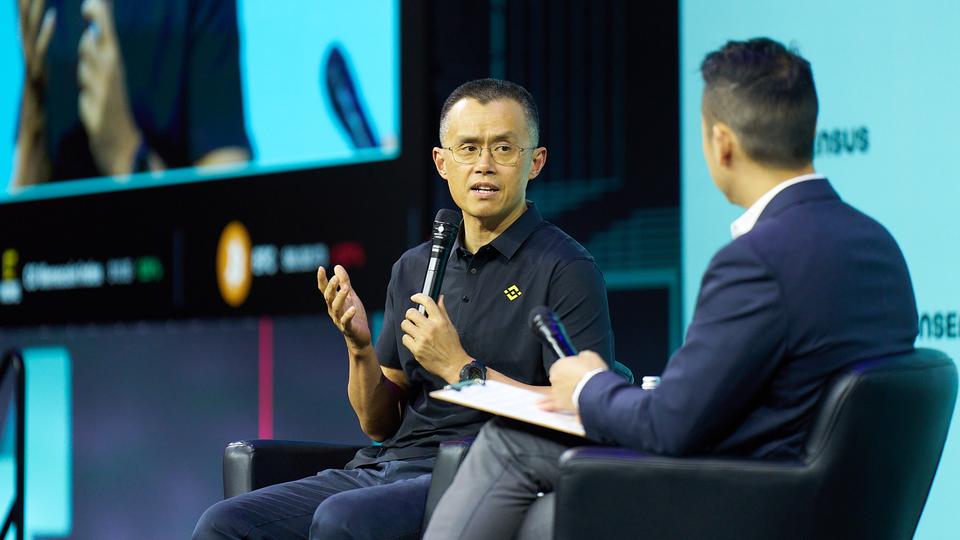
May 21, 2026 — Binance, the world's largest centralized exchange by volume with 280+ million users and $170+ billion in customer assets, launches SPCXUSDT Pre-IPO Perpetual on Binance Futures — the most significant institutional validation of the product category to date. Shunyet Jan, Binance's Head of Spot and Derivatives, states the product is aimed at "democratizing access to market opportunities by combining crypto-native infrastructure with major financial events." The launch is followed within 24 hours by Trade.xyz, which reports $33 million in first-day volume on its own SpaceX perp.
Technical Analysis
Contract Architecture
Binance's SPCXUSDT Pre-IPO Perpetual functions on the same technical rails as the exchange's established crypto perpetuals — USDT-margined, with continuous funding rate settlement and an index price mechanism that anchors to publicly available signals. The key innovation is the oracle design: prior to IPO, the contract's mark price is derived from a weighted composite of secondary market transaction data (Forge, Hiive, EquityZen), reported tender offer prices, announced IPO price ranges (once SpaceX's S-1 becomes public), and analyst consensus estimates. Post-IPO, the mechanism transitions seamlessly to reflect the live Nasdaq spot price, making the contract a true bridge between private and public market regimes.
The funding rate mechanism is central to price discovery integrity. When the perpetual trades above implied fair value (as occurred on Hyperliquid's first day, where SPCX ran from $150 to $216), longs pay shorts an 8-hourly funding rate proportional to the premium — creating a mean-reversion pull. This contrasts with traditional private equity secondary markets where no such arbitrage mechanism exists and prices can deviate from intrinsic value for extended periods. The perpetual structure effectively introduces real-time price discovery discipline absent in platforms like Forge.
Synthetic Exposure vs. Tokenized Equity
The critical structural distinction from earlier tokenized equity experiments (Robinhood's OpenAI tokens, Backed Finance's tokenized stocks) is that pre-IPO perps make no claim on underlying shares. They are purely notional: the trader gains or loses based on the contract's price movement, with settlement in USDT or USDC. This sidesteps the primary legal barrier in private company equity — transfer restrictions embedded in shareholder agreements and the company's certificate of incorporation. SpaceX, like most late-stage startups, requires board approval for secondary transfers; a perpetual derivative does not constitute a "transfer" and therefore does not trigger these provisions.
However, this structural elegance creates its own information problem. The oracle feeding the pre-IPO price is dependent on thin private market order books. As of May 20, Forge's SpaceX bid-ask spread averaged 3.2%, compared to sub-0.1% for comparable large-cap public equity options. When Binance's 280 million users pile into SPCXUSDT, the derivative market's aggregate open interest may quickly dwarf the entire secondary market liquidity feeding its oracle — creating a reflexive dynamic where the derivative itself becomes the de facto price discovery mechanism rather than a reflection of one.
Settlement at IPO
The product's most technically novel feature is its IPO transition mechanism. Binance has described a process where, upon SpaceX's Nasdaq debut, SPCXUSDT's reference price shifts from the pre-IPO oracle composite to the live SPCX spot price. This transition period — likely the 24–48 hours straddling the IPO date — represents maximum risk for holders: the official offering price may differ significantly from where the perpetual has been trading (Hyperliquid's $202.89 settlement implies a ~$2.4T valuation versus the $1.75T official target range), creating a sharp convergence event that could trigger mass liquidations or an equally sharp squeeze in the opposite direction.
flowchart TD
    A[Private Secondary Market\nForge/Hiive/EquityZen\nSPCX ~$650/share] -->|Oracle Feed| B[Pre-IPO Oracle\nWeighted Price Index]
    C[S-1 IPO Price Range\n$1.75T–$2T target] -->|Disclosed Range| B
    D[Analyst Estimates\nPolymarket 70%+ above $2T] -->|Sentiment Signal| B
    B --> E[SPCXUSDT Mark Price\nBinance Pre-IPO Perp]
    E -->|Funding Rate Mechanism| F{Long/Short Imbalance}
    F -->|Longs > Shorts| G[Longs Pay Shorts\nMean Reversion Pull]
    F -->|Shorts > Longs| H[Shorts Pay Longs\nContango Support]
    E -->|IPO Transition Event\nJune 12, 2026| I[Live Nasdaq SPCX Price\nPost-IPO Settlement]
    I -->|Convergence Risk| J[Liquidation/Squeeze\nTransition Risk Window]
    K[Binance User Base\n280M+ Accounts] -->|Trading Activity| E
    L[Competing Perps\nHyperliquid SPCX-USDC\nOKX SPCXUSDT\nTrade.xyz SPCX] -->|Cross-Market Arbitrage| B
On-Chain & Market Data
Metric | Value | Change | Source |
|---|---|---|---|
SPCX Hyperliquid 24h Volume (Day 1) | $33M | New listing | Hyperliquid/CoinDesk |
SPCX Hyperliquid Open Interest (Day 1) | $21.8M | New listing | Hyperliquid/CoinDesk |
SPCX Hyperliquid Day-1 Price Return | +12.72% ($150→$202.89) | N/A | CoinDesk |
SpaceX Forge Secondary Price (May 20) | $650.66/share (~$1.51T implied) | Record high | Forge Global |
SpaceX Target IPO Valuation | $1.75T–$2T | +148%+ vs $800B Dec 2025 | S-1 Reports |
SpaceX Bitcoin Treasury Holdings | 18,712 BTC (~$1.29B) | Q1 2026 | Binance/CoinDesk |
Polymarket IPO >$2T Odds | >70% | N/A | Polymarket |
Binance Registered Users | 280M+ | N/A | Binance |
Binance Customer Assets (PoR) | $170B+ | N/A | Binance PoR |
Binance Exchange Market Share | 39.2% | N/A | CoinLaw |
Binance 2024 Revenue | $16.8B | +40% YoY | Business of Apps |
SpaceX IPO Capital Raise Target | $75B | Largest in U.S. history | SEC/Bloomberg |
The market data reveals a compound narrative: SpaceX's secondary market price on Forge ($650.66, implying ~$1.51 trillion) already represents a 90%+ appreciation from the December 2025 internal tender offer price of $800 billion implied valuation — and still sits below the upper end of the IPO target range. This spread is where the pre-IPO perps derive their speculative energy. Hyperliquid's day-one contract behavior (spikes to $216 against a $150 reference, implying over $2.5 trillion) suggests that crypto-native traders were willing to price in a substantially more bullish IPO scenario than the official range, creating a 30%+ premium over the Forge secondary price. Whether this reflects genuine price discovery or momentum-driven overreach is precisely the kind of question that regulators and risk managers are now asking.
The SpaceX Bitcoin treasury position (18,712 BTC) adds a distinctive crypto-native angle absent from most pre-IPO narratives. SpaceX is not merely a company being traded on crypto rails — it is itself a material holder of digital assets, creating a partial fundamental link between SPCXUSDT and Bitcoin markets. A sharp BTC decline would impair SpaceX's balance sheet modestly, while a BTC rally could enhance the pre-IPO narrative for SpaceX as a crypto-adjacent asset. This dual exposure loop is novel and not adequately priced into current risk models for the perpetual contracts.

Competitive Landscape
Hyperliquid (DeFi, Decentralized Perps)
Hyperliquid was first to market on May 18, establishing SPCX-USDC at a $150 reference price. Its decentralized architecture — a purpose-built L1 with sub-second finality and on-chain order books — gave it a credibility advantage with the DeFi-native user base. Day-one metrics ($33M volume, $21.8M OI) validated product-market fit. However, Hyperliquid's total addressable user base (~500K active wallets vs. Binance's 280M registered accounts) limits its ability to match CeFi venues on aggregate notional volume. Its strength is permissionless listing speed and the ability to serve global users without KYC friction — precisely the users most likely to engage with a speculative pre-IPO derivative. The HYPE token's 7% rally on launch day demonstrated that Hyperliquid's revenue model benefits directly from pre-IPO perp activity, aligning platform and product incentives.
OKX (CeFi, Tier-1)
OKX announced its pre-IPO futures on May 6, covering OpenAI, SpaceX, and Anthropic simultaneously — the first Tier-1 CeFi exchange to publicly commit to the category. OKX's positioning frames these products as part of a broader "beyond crypto" strategy that includes tokenized stocks and real-world asset derivatives. With approximately 50 million users and strong Asia-Pacific penetration, OKX targets a largely different demographic from Binance's global base. The exchange has not disclosed leverage caps or specific settlement mechanics for its pre-IPO contracts, leaving the competitive differentiation around product design unclear relative to Binance.
Injective Protocol (DeFi, Layer-1)
Injective was the category pioneer, having launched pre-IPO perps for OpenAI, Anthropic, Perplexity, and SpaceX in late 2025. Its framing — bringing "$13 trillion in private equity directly on-chain" — articulated the macro thesis before it became consensus. Injective's advantage is composability: pre-IPO perps on Injective can be integrated into DeFi vaults, used as collateral, or combined with on-chain options. Its disadvantage is liquidity fragmentation; without the CEX distribution of Binance or OKX, Injective's SpaceX markets have likely seen a fraction of CeFi volumes.
Forge Global (Traditional Private Markets)
Forge is not a perpetuals platform but represents the underlying secondary market whose prices feed pre-IPO oracle mechanisms. As the dominant institutional private equity marketplace, Forge's data is a key input to pre-IPO contract mark prices. However, Forge's accredited-investor model, $100K+ minimums, and 3-5 business day settlement make it structurally incompatible with real-time derivatives trading. The emergence of crypto perps that reference Forge pricing data without requiring Forge accounts represents a genuine disruption to Forge's downstream retail ambitions — and may pressure the company toward crypto-native settlement or DeFi integrations of its own.
Trade.xyz (CeFi, Emerging)
Trade.xyz reported $33 million in first-day volume on its SpaceX pre-IPO perp, matching Hyperliquid's output despite being a smaller platform. Its rapid execution suggests a growing cohort of mid-tier CeFi venues prepared to compete for pre-IPO derivative flow, potentially fragmenting liquidity across a dozen or more venues by the time of SpaceX's actual listing in June.
Stakeholder Analysis
Retail Traders
The nominal beneficiaries of this product category. For the first time, a retail trader in Lagos, Jakarta, or São Paulo can take a leveraged position on SpaceX's IPO valuation without an accredited investor designation, minimum capital requirements, or a brokerage account. The democratization narrative is genuine but must be tempered: these traders are accessing the highest-volatility window of SpaceX's lifecycle with leverage, against a price oracle whose inputs are thin and potentially manipulable. The transition event at IPO creates a known liquidation risk that sophisticated traders will be positioned to exploit.
Binance as a Platform
The strategic upside for Binance is substantial. Pre-IPO perpetuals create a new fee-generating category with a built-in hype cycle (each major private company IPO triggers a new listing), a cross-selling opportunity (SpaceX traders may expand into BTC and ETH), and a brand narrative that transcends crypto — positioning Binance as the entry point not just for digital assets but for pre-public-market exposure to landmark companies. Given Binance's $16.8B revenue in 2024 and 39.2% market share, even a single-digit percentage increase in derivatives fee income from pre-IPO products represents hundreds of millions annually.
SpaceX and Elon Musk
SpaceX is entirely uninvolved in and receives no proceeds from these instruments. However, the existence of highly visible derivatives markets sets a real-time public expectation for its IPO valuation that the company cannot ignore. If SPCXUSDT trades at $250 (implying $3 trillion) on the eve of SpaceX's roadshow, the company faces investor expectations that its official range cannot fulfill — potentially complicating book-building. Conversely, if the derivative crashes, it could negatively influence retail sentiment toward the actual IPO. Elon Musk, as SpaceX's largest stakeholder and an active social media presence in crypto, creates a unique feedback loop where his tweets could materially move both the derivative and the pre-IPO secondary market simultaneously.
Regulators (SEC, CFTC)
Both agencies are in an awkward position. The SEC's January 2026 statement explicitly flagged synthetic private-company exposure products as a disclosure-gap risk, noting the absence of the audited financials and periodic reporting that govern public companies. The CFTC/SEC joint statement from September 2025 had signaled openness to "onshoring" perpetual derivatives with appropriate safeguards — but neither agency has moved to provide a concrete framework. Binance's launch, given its 2023 CFTC consent order (which established admission of guilt on anti-money-laundering failures), adds political sensitivity: the agency must decide whether to treat this product as a provocation or an opportunity to engage constructively.
Traditional Capital Markets (Investment Banks, VC)
Pre-IPO perps undermine the traditional book-building advantage of Goldman Sachs, Morgan Stanley, and JPMorgan — the banks running SpaceX's IPO. Historically, the pre-IPO period is when institutional allocators negotiate preferential access that retail investors cannot match. A liquid derivative market that establishes the "fair" IPO price before the roadshow compresses that information asymmetry, potentially weakening the bookrunners' ability to price above secondary market levels. VC firms and SpaceX employees holding restricted shares, meanwhile, cannot hedge via these derivatives without triggering complex tax and securities law questions.
Risk Assessment
Oracle Manipulation and Price Discovery Failure — The pre-IPO oracle relies on thin secondary market data (Forge's SpaceX book has limited daily transactions relative to the notional value of derivatives now referencing it). A large buyer or coordinated actors in the Forge secondary market could manipulate the oracle feed, profiting from resultant perpetual price movements. Severity: High. Probability: Medium. Hyperliquid's first-day spike to $216 (from $150 reference) before settling at $203 is early evidence that the derivative can substantially overshoot secondary market fair value.
IPO Transition Liquidation Event — The moment SpaceX's official IPO price is set and Nasdaq trading begins, all pre-IPO perps must converge to the live spot price. If derivatives are trading at a significant premium (the current Hyperliquid price implies >$2.4T vs. the $1.75–2T official range), a snap-to-spot could trigger cascading liquidations across Binance, OKX, Hyperliquid, and Trade.xyz simultaneously. Given combined open interest likely measured in hundreds of millions by June 12, this represents a systemic risk event for the crypto derivatives ecosystem. Severity: High. Probability: Medium-High.
Regulatory Interdiction (SEC/CFTC) — Binance's 2023 CFTC consent order makes it a high-profile target for renewed enforcement attention. If the SEC determines that SPCXUSDT constitutes a synthetic security requiring registration (under the Reves v. Ernst & Young "family resemblance" test or similar), Binance could face an enforcement action that forces product delisting and triggers user lawsuits. The absence of an established regulatory framework means this risk is binary — the product either escapes scrutiny or faces severe consequences. Severity: Critical. Probability: Low-Medium (current U.S. political environment is more crypto-friendly than 2023, but the CFTC/SEC consent order history elevates Binance's specific exposure).
Reflexive Market Dynamics / SpaceX IPO Failure — If SpaceX delays or cancels its IPO (a scenario given history — Uber, Lyft, and WeWork all experienced IPO disruptions), pre-IPO perps would face a severe repricing event with no natural settlement mechanism. Without a live Nasdaq price to transition to, the oracle reverts to thin secondary market data while liquidations cascade. Severity: High. Probability: Low (SpaceX's April S-1 filing and $75B raise target indicate strong institutional commitment to the timeline, but black swan risks around Musk's regulatory conflicts or macroeconomic deterioration cannot be dismissed).
Investment & Strategic Implications
For crypto-native funds and systematic traders, the pre-IPO perpetuals market presents a structural alpha opportunity during the convergence event. Long/short strategies that position in the derivative while taking a hedged exposure in SpaceX's actual IPO allocation (via institutional book) can capture the premium compression at settlement. The current implied premium (~30-40% above Forge's secondary price on Hyperliquid) suggests the derivative is pricing in a more bullish IPO outcome than the traditional private market — a classic momentum-driven overshoot that mean-reversion strategies can exploit. However, this requires the liquidity and institutional access to simultaneously hedge in both markets, limiting the strategy to sophisticated multi-asset funds.
For builders in the DeFi and CeFi infrastructure space, Binance's launch is a product validation signal worth acting on. The three-day gap between Hyperliquid's May 18 launch and Binance's May 21 entry illustrates how quickly product innovation diffuses in this market. Infrastructure providers — oracle networks (Pyth, Chainlink), decentralized clearing layers, and cross-margin risk engines — that can serve the specific requirements of pre-IPO perps (hybrid oracle design, IPO transition event handling, accredited-investor compliance for U.S. users) are positioned to be critical vendors in a market that will see a new listing with every major private company IPO. The pipeline is deep: OpenAI, Anthropic, Stripe, Klarna, and Databricks all have plausible 2026–2027 listing timelines.
For traditional financial institutions monitoring this space, the strategic implication is harder to ignore than it was six months ago. When Injective launched pre-IPO perps it could be dismissed as a DeFi novelty; when Binance launches them on the eve of a $2 trillion IPO, the product has graduated to a systemically relevant category. Investment banks running IPO book-builds should begin modeling how large crypto derivative open interest affects their ability to price offerings: if SPCXUSDT carries $500M+ in open interest by June 10, the implied price in that market will be a real-time public referendum on the $1.75T IPO range, creating pressure that the traditional quiet-period framework was not designed to manage.
Outlook: 30 / 180 / 365 Days
30 days: SpaceX's June 12 Nasdaq debut will be the first live test of the IPO transition mechanism. If the official IPO price falls within 10% of where SPCXUSDT has been trading, the product design will be validated and Binance will announce additional pre-IPO perp listings (OpenAI and Anthropic are the obvious next candidates). If the transition triggers mass liquidations, open interest will collapse and the exchange may pause the product pending redesign. The critical indicator to watch is the funding rate premium in the week leading up to June 12: a rate above 0.1% per 8 hours (>10% annualized) would signal unsustainable longs and elevated transition risk.
180 days: By November 2026, pre-IPO perpetuals will have been tested against at least 2–3 major IPO events (OpenAI and/or Anthropic listings are plausible in this window). If the product category survives without a major regulatory action or catastrophic liquidation event, it will become a standard feature of Tier-1 exchange product rosters. Total open interest across platforms will likely reach $1B+, and the SEC and CFTC will have either issued formal guidance (potentially restricting U.S. person access) or allowed the regulatory ambiguity to persist. A key risk scenario: if OpenAI publicly distances itself from any derivative market (as it did from Robinhood's token), it could trigger a political response that accelerates enforcement.
365 days: Over a 12-month horizon, the pre-IPO perps market either institutionalizes or fragments. Institutionalization looks like: a major bank desk market-making on Binance or Deribit pre-IPO contracts, formalized oracle standards accepted by both CeFi and DeFi venues, and CFTC guidance that permits the product with leverage caps (likely 20x max). Fragmentation looks like: regulatory interdiction in 2–3 major jurisdictions, a high-profile liquidation event that damages retail users, and Binance pivoting away from the product to avoid consent order complications. The structural bet — that crypto rails are genuinely superior to Forge Global for democratizing pre-IPO exposure — is sound; the uncertainty is whether the regulatory and risk-management infrastructure catches up to product innovation at the pace required.
References
Binance launches SpaceX pre-IPO perps amid $2 trillion valuation bets — CoinDesk, May 21, 2026
OKX joins crypto's pre-IPO frenzy with OpenAI, SpaceX perpetual futures — CoinDesk, May 6, 2026
The Funding: As SpaceX's listing nears, are pre-IPO perps crypto's next big market? — The Block
OKX to Launch OpenAI, SpaceX and Anthropic Perpetual Futures in Pre-IPO Trading Push — Decrypt
Crypto Traders Can Now Bet On SpaceX Before IPO: Should That Worry Regulators? — Yahoo Finance
Polymarket rolls out prediction markets tracking IPOs, valuations for private companies — The Block
Private Market Update: SpaceX IPO and April 2026 Trends — Forge Global
Binance Revenue and Usage Statistics (2026) — Business of Apps
Hyperliquid Defies Market Downturn as SpaceX, Anthropic, OpenAI IPOs Loom — Decrypt
SpaceX IPO (SPCX) Explained: What Retail Investors Need to Know Before June 11 — HeyGoTrade