On-Chain Equities Cross the Rubicon: SEC's Innovation Exemption Meets the First $1 Billion Tokenized Stock Platform
The SEC's long-awaited shift to permit on-chain equity trading, paired with Ondo Global Markets crossing $1B TVL, marks the end of tokenized stocks as an experiment and the beginning of a regulated on-chain capital market.
Executive Summary
Ondo Global Markets surpassed $1 billion in total value locked in under eight months — the first tokenized stock platform ever to reach this threshold — on $18 billion in cumulative trading volume and a 70%+ market share among equity token issuers.
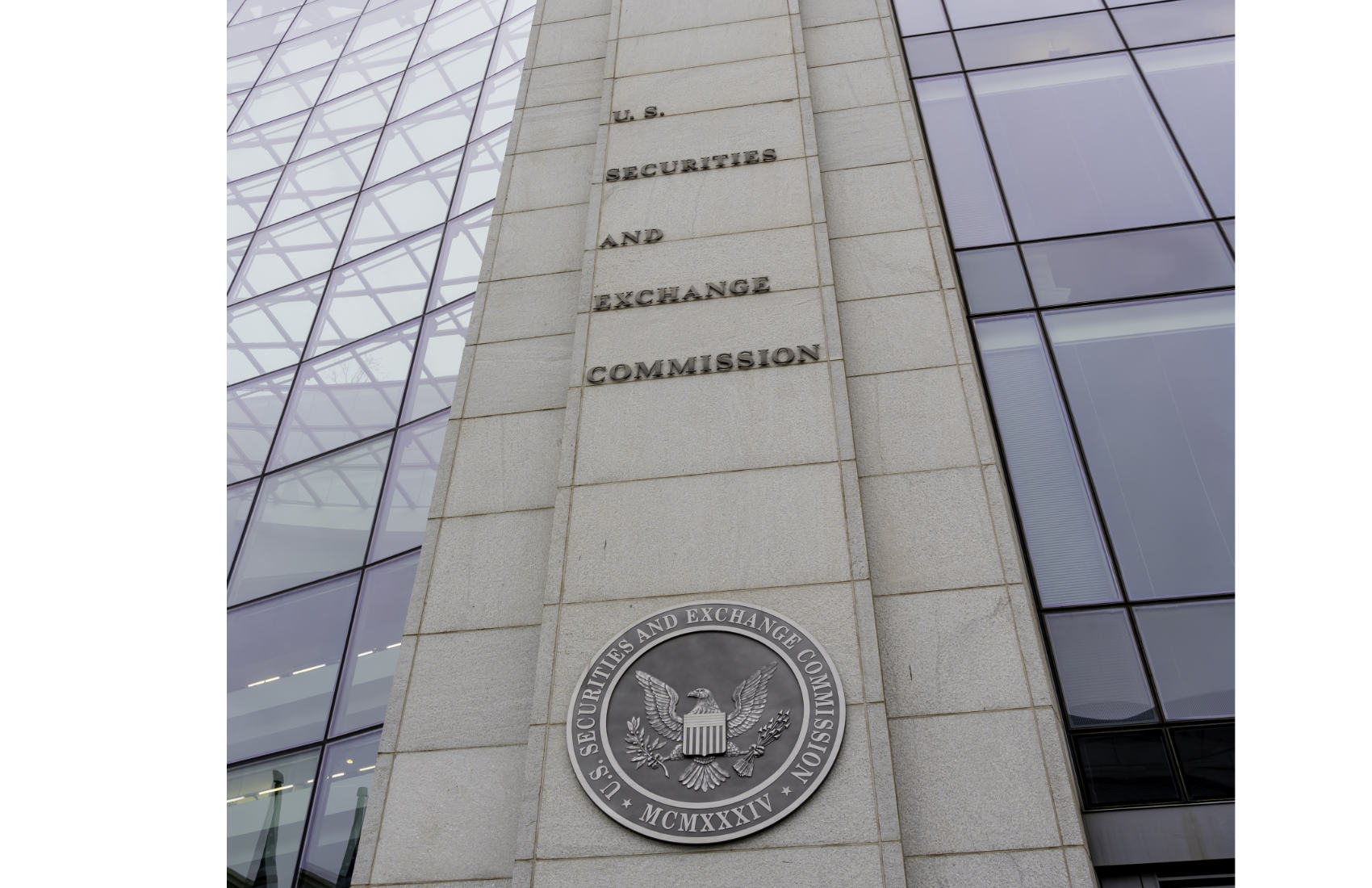
The U.S. Securities and Exchange Commission, under Chair Paul Atkins' "Project Crypto" mandate, is preparing an Innovation Exemption that would open a 12–36 month regulatory sandbox allowing tokenized stocks to be issued and traded on public blockchains and DeFi protocols — a categorical reversal of the enforcement-first approach of the prior administration.
The combined RWA tokenization market has reached $31 billion in total value locked, a four-fold expansion from $7.8 billion at the start of 2025, with tokenized stocks specifically hitting $1.43 billion across 2,200+ assets and 267,710 holders.
The SEC exemption's extension to third-party tokens (created without the underlying company's consent) dramatically widens the scope and introduces novel legal ambiguities around shareholder rights, dividend eligibility, and securities classification.
With DTCC targeting production tokenized securities trades in July 2026, Ondo confidentially filing an SEC registration statement, and Kraken acquiring Backed Finance, the tokenized equity market is entering a structurally accelerating phase — but regulatory arbitrage risks and custodial concentration remain key near-term threats.
Background & Market Context
The tokenization of real-world assets has evolved from a theoretical application of blockchain technology into one of the most consequential structural shifts in capital markets infrastructure. Since 2023, institutional actors — from BlackRock and Franklin Templeton to J.P. Morgan and DTCC — have poured billions into on-chain representations of government bonds, money market instruments, and credit products. The tokenized U.S. Treasury segment alone crossed $10 billion in early 2026, fueled by the yield environment and growing demand from crypto-native protocols seeking compliant, yield-bearing collateral.
Tokenized equities arrived later and faced more complex regulatory friction. Unlike money market tokens, which map cleanly to existing broker-dealer and fund structures, tokenized stocks sit at the intersection of securities law, market microstructure, and blockchain technology in ways that existing exemptions did not cleanly accommodate. The SEC under former Chair Gary Gensler treated the space with hostility — viewing most tokenized asset products as securities requiring full registration under 1933 and 1934 Act frameworks that were never designed for on-chain settlement. The practical consequence was that tokenized U.S. stocks were accessible only to non-U.S. investors, offshore through exempt structures, leaving the world's largest equity market largely off-chain.
The macro context shifted dramatically in late 2025 and early 2026. The GENIUS Act, passed in 2025, established a federal digital asset framework that finally gave legal clarity to stablecoin issuers and digital asset intermediaries. Simultaneously, Paul Atkins was confirmed as SEC Chair with an explicit mandate to resolve the crypto regulatory backlog. Atkins' "Project Crypto" initiative produced a joint CFTC-SEC token taxonomy in March 2026, classifying digital assets into five categories and narrowing SEC jurisdiction to tokenized securities specifically — clearing the path for a purpose-built regulatory regime for on-chain equities.
It is against this backdrop that two developments in May 2026 crystallized a new era: Ondo Global Markets became the first tokenized stock platform to exceed $1 billion in TVL, and the SEC moved to publish an Innovation Exemption that would legalize on-chain equity trading in the United States for the first time. These are not coincidental milestones — they are mutually reinforcing proof points that the structural demand is real, the technology is mature, and the regulatory will to accommodate it now exists.
Key Developments
July 2025 — "Project Crypto" Launched: SEC Chair Paul Atkins officially launched Project Crypto, a comprehensive regulatory reform program targeting digital asset policy. The initiative established a dedicated crypto task force within the SEC and committed to replacing enforcement-driven policy with rulemaking. This provided the institutional framework for the tokenized stock exemption that would follow.
September 2025 — Ondo Global Markets Launch: Ondo Finance publicly launched Ondo Global Markets, offering tokenized U.S. stocks and ETFs for eligible non-U.S. investors. The platform launched with access via Binance and Bitget, with assets held in custody at a U.S.-registered broker-dealer and tokens issued on Ethereum and Solana. Initial TVL was modest but institutional appetite was immediately evident.
February 2026 — ETHDenver Signals: At ETHDenver, SEC Chair Atkins and Commissioner Hester Peirce first publicly floated the concept of an innovation exemption allowing tokenized stocks to trade on DeFi automated market makers — a trial balloon that marked the first formal regulatory acknowledgment that on-chain equity trading would be accommodated rather than prosecuted.
March 2026 — Joint CFTC-SEC Token Taxonomy: The CFTC and SEC published a five-category digital asset taxonomy that explicitly carved out tokenized securities as an SEC-jurisdiction class, providing jurisdictional clarity that had been missing for years. This eliminated the regulatory ambiguity that had prevented U.S. institutional actors from participating in tokenized stock platforms.
March 2026 — Ondo Abu Dhabi Approval: Ondo Finance's tokenized stocks platform on Binance received regulatory approval from the Financial Services Regulatory Authority (FSRA) of Abu Dhabi Global Market, making it the first tokenized securities product admitted to ADGM trading. This followed EU/EEA approval across 30 countries via a FMA Liechtenstein prospectus, opening over 500 million potential investors globally.
May 6, 2026 — J.P. Morgan/Mastercard/Ripple Settlement Pilot: Ondo announced a cross-border tokenized Treasury redemption pilot with J.P. Morgan, Mastercard, and Ripple, achieving near-instant 5-second settlement — a demonstration of the efficiency gains that tokenized settlement infrastructure can deliver over legacy T+2 systems.
May 12, 2026 — $1 Billion TVL Milestone: Ondo Global Markets officially crossed $1 billion in total value locked — the first tokenized stock platform in history to reach this threshold. TVL had doubled since January 2026, with cumulative trading volume reaching $18 billion. The platform listed 260+ tokenized U.S. stocks and ETFs on Solana, Ethereum, and BNB Chain.
May 18, 2026 — Bloomberg SEC Report: Bloomberg reported that the SEC was prepared to publish an Innovation Exemption enabling tokenized stock trading on public blockchains and DeFi protocols, potentially covering third-party token issuers that create equity tokens without the underlying company's consent — a significantly broader scope than previously anticipated.
May 2026 — Kraken Acquires Backed Finance: Kraken announced the acquisition of Backed Finance AG, the Swiss entity behind xStocks — the second-largest tokenized equity platform with approximately 24% market share. The acquisition positioned Kraken to compete directly with Ondo ahead of its anticipated 2026 IPO, and came after xStocks had already surpassed $25 billion in total transaction volume since its June 2025 launch.
July 2026 (Target) — DTCC Production Trades: The Depository Trust & Clearing Corporation announced a target date of July 2026 for initiating limited production trades of tokenized securities, with Ondo included in its tokenized securities consortium alongside BlackRock and Goldman Sachs.

Technical Analysis
Tokenized stock platforms operate on a custodial bridge model: an underlying security is purchased and held in custody at a registered broker-dealer, and a corresponding digital token is minted on a public blockchain. The token holder acquires either beneficial ownership rights (dividends, voting) or purely economic exposure (price-tracking), depending on the legal structure. Ondo Global Markets uses the former model — tokens are fully backed by underlying securities held at a U.S. broker-dealer, with dividends tracked and distributed to token holders and, in principle, voting rights conveyed. This structure positions Ondo tokens as closer to traditional securities, which creates regulatory complexity but also stronger investor protection.
The competing model, exemplified by xStocks under Backed Finance/Kraken before its acquisition, uses a structure closer to asset-backed notes or structured products. xStocks tokens are 1:1 backed by the underlying asset in custody but are technically structured notes issued under Swiss financial law, not direct equity ownership. This legal structure allowed xStocks to scale rapidly without SEC registration, serving non-U.S. investors under Regulation S exemptions, while offering 24/5 trading on Solana and Ethereum with Kraken as a distribution partner. The tradeoff is that token holders' claims in insolvency scenarios may be more complex than with direct equity ownership.
The SEC Innovation Exemption, as reported, would introduce a third structural path specifically designed for the U.S. market: a regulatory sandbox allowing companies to issue and trade tokenized securities on public blockchains and DeFi protocols without full SEC registration for a 12–36 month period, subject to KYC/AML requirements and anti-fraud provisions. Critically, the exemption's reported scope extension to third-party tokens — those created by intermediaries without the issuer company's involvement — mirrors how crypto markets already operate (e.g., Wrapped Bitcoin was not created by Bitcoin's non-existent corporate issuer). This allows the ecosystem to expand the tokenized equity universe far beyond what individual companies would choose to voluntarily register.
The technical architecture required to support DeFi AMM trading of tokenized stocks introduces novel engineering challenges. Automated market makers like Uniswap V3 or Curve operate permissionlessly, but tokenized securities require permissioned access to comply with investor eligibility requirements and sanctions screening. The likely implementation path involves on-chain whitelisting — where token transfers are restricted to addresses that have completed KYC verification through approved providers — combined with oracle-based price feeds to anchor on-chain pricing to real-time market data. Chainlink and Pyth Network are positioned as likely infrastructure providers for real-time equity price feeds, while identity infrastructure providers like Civic and Worldcoin's World ID are potential KYC oracle partners.
Settlement finality is another critical dimension. Traditional equity settlement occurs on T+2 (two business days), introducing counterparty risk during the settlement window. Tokenized stock platforms operating on Solana achieve near-instant finality (roughly 400ms block time), while Ethereum mainnet offers 12-second finality. The May 2026 J.P. Morgan/Mastercard/Ripple pilot achieving 5-second cross-border settlement demonstrates that institutional-grade tokenized settlement is not merely theoretical — it is operational today. The DTCC's July 2026 production target will bring this infrastructure into contact with the $87 trillion global equity market's settlement backbone.
flowchart TD
    A[U.S. Listed Securities\nNYSE / Nasdaq] --> B[Registered Broker-Dealer\nSEC-Regulated Custody]
    B --> C{Token Structure}
    C -->|Full Ownership Model| D[Ownership Tokens\nDividends + Voting Rights\nOndo Global Markets]
    C -->|Structured Note Model| E[Synthetic / Note Tokens\nPrice-Tracking\nxStocks / Backed Finance]
    D --> F[On-Chain Issuance\nSolana · Ethereum · BNB Chain]
    E --> F
    F --> G{SEC Innovation Exemption\nSandbox 2026}
    G -->|Approved Channels| H[CEX Integration\nBinance · Bitget · Kraken]
    G -->|Whitelisted AMMs| I[DeFi Protocols\nPermissioned AMMs\nKYC-Gated Pools]
    G -->|Wallet Distribution| J[Non-Custodial Wallets\nMetaMask · Phantom]
    H --> K[267,710 Token Holders\nGlobal]
    I --> K
    J --> K
    K --> L[$1.43B Market Value\n$3.1B Monthly Volume]
    M[DTCC Production Trades\nJuly 2026 Target] --> B
    N[GENIUS Act 2025\nFederal Framework] --> G
    O[CFTC-SEC Taxonomy\nMarch 2026] --> G
On-Chain & Market Data
Metric | Value | Change | Source |
|---|---|---|---|
Ondo Global Markets TVL | $1.0B+ | +100% since Jan 2026 | Ondo Finance / PRNewswire |
Total Tokenized Stock Market Value | $1.43B | +~30% past month | Bitcoin.com / rwa.xyz |
Ondo Market Share (Tokenized Equities) | ~52–70% | Dominant | Ondo / CoinGape |
xStocks / Backed Market Share | ~24% | Scaling | Kraken / Ledger Insights |
Monthly Transfer Volume (Tokenized Stocks) | $3.10B | Rising | Bitcoin.com |
Token Holders (Tokenized Stocks) | 267,710 | Growing | Bitcoin.com |
Cumulative Trading Volume (Ondo) | $18B | Since Sept 2025 | PRNewswire |
Total RWA TVL (All Categories) | $31B | +4x since Jan 2025 | MEXC / Coinfomania |
Tokenized Treasuries TVL | $10B+ | +225% in 15 months | Lodge Post |
xStocks Total Transaction Volume | $25B+ | Since June 2025 | Kraken Blog |
Assets on Ondo Global Markets | 260+ stocks/ETFs | At $1B milestone | PRNewswire |
Tokenized Assets (All) | 2,200+ | Growing | Bitcoin.com |
The on-chain data tells a story of explosive but concentrated growth. Ondo's dominance — with 52–70% market share depending on measurement methodology — reflects the advantage of being first to market with institutional-grade distribution (Binance, Bitget) and multi-chain deployment. However, the $18 billion in cumulative trading volume against $1 billion TVL implies a velocity ratio (turnover) of roughly 18x, indicating these are actively traded instruments rather than passive holds. This trading velocity is far higher than comparable tokenized Treasury products, where the primary use case is collateral and yield — suggesting tokenized equity holders are using these instruments for active portfolio management and speculative exposure.
The gap between total market value ($1.43 billion) and Ondo's individual TVL ($1.0 billion) implies the non-Ondo segment (primarily xStocks/Backed, Securitize, and Robinhood) represents approximately $430 million in value, with xStocks' $394 million the dominant second force. Robinhood's 943 tokenized stocks on Arbitrum carry only about $10.8 million in on-chain value — indicating high token count but low per-asset depth, consistent with a retail-oriented, low-minimum-investment approach. The 267,710 token holders figure is notable: while small compared to crypto DEX participants, it represents a meaningful early institutional and sophisticated retail cohort that has crossed the KYC threshold for compliant tokenized equity access.
Competitive Landscape
Ondo Global Markets (Leader): Ondo holds roughly 52–70% of the tokenized equity market by TVL, with $1 billion+ locked and $18 billion in cumulative trading volume since September 2025 launch. Its structural advantages are threefold: distribution (Binance, Bitget reach hundreds of millions of users), regulatory depth (EU/EEA approval in 30 countries, Abu Dhabi ADGM admission, SEC confidential filing), and institutional credibility (DTCC consortium membership alongside BlackRock and Goldman Sachs). Ondo's full ownership token structure — with dividends and voting rights — positions it well for the SEC's Innovation Exemption eligibility criteria, which reportedly favor instruments conveying these shareholder attributes. Weaknesses include concentration risk (Binance represents a single point of distribution failure) and its dependence on continued regulatory favorable treatment.
Backed Finance / xStocks (acquired by Kraken): Before the Kraken acquisition, Backed Finance operated as a Swiss-based, Regulation S exempt issuer of structured equity tokens. xStocks accumulated $25 billion in total transaction volume and over $394 million in market value — a remarkable achievement through exchange distribution channels. Kraken's acquisition changes the competitive calculus significantly: xStocks gains a vertically integrated path from exchange custody → token issuance → secondary trading, eliminating the intermediary layer that most tokenized stock platforms depend on. However, the structured note legal model means xStocks tokens may not qualify for the SEC Innovation Exemption's "voting rights and dividends" eligibility criteria, potentially creating a two-tier regulatory landscape where full ownership tokens gain broader DeFi access while synthetic instruments remain exchange-restricted.
Robinhood (Retail Channel, Arbitrum): Robinhood launched 943 tokenized stocks and ETFs on its proprietary Layer-2 (built on Arbitrum) for European Union users. The $10.8 million on-chain TVL is deceptively small — Robinhood's competitive advantage is not TVL concentration but user reach: tens of millions of retail investors already have Robinhood accounts, and the platform's tokenized stock offering lowers the onboarding friction to near-zero for its existing base. Robinhood's zero-commission model and 24/5 trading hours directly challenge traditional brokers. Its weakness is geographic restriction (EU only for tokenized stocks) and the absence of DeFi composability — Robinhood's Layer-2 tokens are not designed for permissionless use in external AMMs or lending protocols.
BlackRock / Franklin Templeton (Tokenized Funds, Not Equities): BlackRock's BUIDL (tokenized money market fund) and Franklin Templeton's FOBXX represent the institutional-grade layer of the RWA ecosystem but focus on debt and cash equivalents, not equities. These players have established the institutional infrastructure rails — Securitize as transfer agent, custodian relationships, compliance frameworks — that tokenized equity platforms are now building upon. BlackRock's participation in the DTCC tokenized securities consortium (alongside Ondo and Goldman Sachs) suggests it may extend into equities tokenization, either organically or via partnership, once the regulatory sandbox is live. If BlackRock launches a tokenized equity product, it would immediately compress Ondo's institutional market share.
Securitize (Infrastructure Provider): Securitize controls approximately 20% of tokenized equity market share and operates as the transfer agent and issuance infrastructure provider for BlackRock BUIDL and others. Its business model — providing compliant token issuance rails to institutional issuers rather than being an end-market competitor — makes it a critical infrastructure layer that benefits from industry growth regardless of which platform wins. A regulatory sandbox that opens tokenized equity issuance to more institutional players would expand Securitize's addressable market.
Stakeholder Analysis
Institutional Investors: The primary near-term beneficiaries are non-U.S. institutional investors (sovereign wealth funds, hedge funds, family offices in APAC, Middle East, and Europe) who gain efficient 24/5 access to U.S. equities without the friction of traditional brokerage infrastructure. The Abu Dhabi and EU regulatory approvals have opened these markets. U.S.-based institutional investors will benefit once the SEC Innovation Exemption is published, potentially accessing tokenized equities through compliant DeFi pools and reducing their exposure to T+2 settlement counterparty risk.
Retail Investors: Retail investors in emerging markets — where access to U.S. equity markets is restricted by FX controls, high broker minimums, and limited financial infrastructure — represent the largest long-term demand pool. Ondo's Binance integration alone theoretically reaches hundreds of millions of users. However, retail access remains limited by KYC requirements and the jurisdictional restrictions that make many tokenized stock platforms available only to non-U.S. persons. The SEC Innovation Exemption sandbox could, for the first time, create a compliant path for retail U.S. investors to participate in on-chain equity markets.
DeFi Protocols: Protocols including lending markets (Aave, Morpho), yield aggregators, and structured product platforms stand to gain new high-quality collateral assets if tokenized stocks enter DeFi. This is the most transformative medium-term implication of the SEC's reported exemption extension to third-party tokens and DeFi AMMs. A liquid tokenized S&P 500 ETF usable as DeFi collateral would create entirely new use cases: crypto-native users could borrow against equity positions, yield strategies could blend tokenized equity returns with DeFi yield, and on-chain structured products (capital-protected notes, covered calls) become buildable on permissioned composable infrastructure.
Traditional Brokers and Exchanges: Nasdaq and NYSE are actively developing on-chain settlement infrastructure, recognizing tokenized trading as an existential challenge to their franchise. Traditional brokers face a more complex position: they risk disintermediation if investors bypass them to access tokenized stocks directly through wallets and AMMs, but they also hold the custodial and regulatory infrastructure that token issuers depend on. The T+2 settlement model — a revenue-generating friction point for brokers — is directly threatened by blockchain-native instant settlement.
Regulators: The SEC's shift under Atkins represents a strategic bet that regulatory accommodation of tokenized securities will preserve U.S. market leadership in global capital formation. The risk is that a permissive sandbox creates systemic vulnerabilities — market manipulation in low-liquidity tokenized stocks, investor protection gaps in third-party token structures, or AML failures in DeFi AMMs — that force an enforcement reversal. The GENIUS Act's federal framework provides backstop authority, but implementation details of the Innovation Exemption will determine whether the regulatory experiment succeeds.
Risk Assessment
Regulatory Reversal Risk — The SEC Innovation Exemption is a sandbox, not permanent rulemaking. A change in SEC leadership, a high-profile fraud incident in tokenized stocks, or Congressional pushback could result in the exemption's non-renewal after the 12–36 month trial period. The prior administration's enforcement-first approach demonstrated how rapidly regulatory posture can shift. Severity: High | Probability: Medium (20–30% given current political context).
Custodial Concentration Risk — Ondo's tokens are backed by securities held at a single U.S. broker-dealer. If that entity faces insolvency, regulatory action, or operational failure, $1 billion+ in tokenized assets could be frozen or impaired. This is structurally analogous to the FTX collapse — the on-chain tokens are only as good as the off-chain custody backing them. Investors in DeFi may not fully understand this dependency. Severity: High | Probability: Low (5–10%), but tail risk is severe and concentration is high.
Third-Party Token Legal Ambiguity — The SEC's reported extension of the Innovation Exemption to tokens created without the underlying company's consent introduces unresolved legal questions: Do holders of third-party tokenized stock (e.g., a token representing Apple shares created by a third-party issuer without Apple's involvement) have any recourse against Apple or the SEC in cases of price manipulation or corporate action disputes? Can companies block third-party tokenization of their shares? This ambiguity could generate litigation that chills the market. Severity: Medium | Probability: High (60–70% that at least one major legal challenge emerges within 24 months).
Liquidity Fragmentation Risk — The market currently has five or more distinct tokenized stock ecosystems (Ondo, xStocks, Robinhood, Securitize, and future entrants) with limited interoperability. Fragmented liquidity means higher slippage costs for traders, lower price discovery efficiency, and duplication of KYC infrastructure costs. Without a cross-platform interoperability standard (analogous to ERC-20 for fungible tokens), tokenized stock liquidity may never aggregate to the depth required for institutional market making. Severity: Medium | Probability: High (70–80% near term).
Smart Contract and Oracle Risk — DeFi integration of tokenized stocks introduces technical risks absent in traditional equity markets: smart contract exploits could drain collateral pools, oracle manipulation could artificially reprice tokenized stocks to trigger liquidations, and cross-chain bridge failures could result in double-spent or lost tokens. These risks are manageable with audited code and circuit breakers, but they represent a fundamentally new attack surface for equity market infrastructure. Severity: High | Probability: Medium (15–25% of a meaningful exploit occurring within 24 months across the ecosystem).
Investment & Strategic Implications
For investment funds and asset allocators, the convergence of the SEC Innovation Exemption and the $1B TVL milestone represents a strategic inflection point — not just for the tokenized stock sector, but for the entire RWA capital markets thesis. The critical insight is that tokenized equities are not a crypto-native product being forced into traditional finance; they are a traditional finance product (U.S. equities) being delivered through more efficient infrastructure. This reframing means the addressable market is not the $3 trillion crypto ecosystem but a portion of the $120+ trillion global equity market's settlement, custody, and distribution inefficiency. Funds positioned in Ondo Finance's native token (ONDO), Securitize infrastructure, or crypto exchange equities (Coinbase, Robinhood, Kraken via its anticipated IPO) gain exposure to this structural shift at different points in the value chain.
For protocols and DeFi builders, the SEC's Innovation Exemption — particularly its reported extension to DeFi AMMs — is the most significant regulatory development since the GENIUS Act. The ability to build permissioned liquidity pools containing tokenized stocks, Treasuries, and stablecoins enables a new category of compliant DeFi structured products. Builders should prioritize: (1) KYC infrastructure partnerships (verifiable credentials, on-chain identity attestations), (2) oracle integrations with Chainlink or Pyth for real-time equity pricing, (3) permissioned AMM architectures that enforce investor eligibility at the pool level rather than the application layer. The 12–36 month sandbox window is not a constraint — it is a competitive moat for protocols that move first.
For traditional financial institutions (prime brokers, custodians, exchanges), the DTCC's July 2026 production target is the line in the sand. Banks and exchanges that have not begun building tokenized settlement infrastructure by mid-2026 risk falling behind in a market where their institutional clients — asset managers, hedge funds, sovereign wealth funds — are already accessing 24/5 tokenized equity markets through Ondo and Binance. The lesson from the tokenized Treasury market is instructive: BlackRock's BUIDL launch in March 2024 accelerated institutional adoption more than any startup's product, because it brought the BlackRock brand imprimatur into the space. An equivalent BlackRock or Goldman Sachs tokenized equity product, expected once the SEC exemption provides legal cover, could 10x the market within 12 months of launch.
Outlook: 30 / 180 / 365 Days
30 days: The SEC will publish its Innovation Exemption framework (expected by late May 2026 based on Bloomberg reporting). If it includes third-party token provisions and DeFi AMM access as reported, ONDO token and competing equity token platforms will rally sharply. Watch for Ondo's confidential SEC registration statement becoming public — if approved, it marks the first SEC-registered tokenized stock issuer in history, a categorical re-rating event. The market cap of tokenized stocks will cross $2 billion within 30 days if the exemption publishes with its full reported scope.
180 days: The DTCC's July 2026 production trade target will determine whether institutional settlement infrastructure is truly being integrated with on-chain tokenized securities. If successful, expect two or three major U.S. prime brokers to announce tokenized equity custody and issuance programs. Tokenized stock TVL will reach $3–5 billion by November 2026 (consistent with Ondo President Ian De Bode's $3 billion forecast), driven by institutional adoption following regulatory clarity. Robinhood will expand its tokenized stock offering from the EU to additional jurisdictions. Kraken's xStocks will leverage its Backed Finance acquisition to reach 500+ tokenized assets by year-end, directly challenging Ondo's catalog advantage.
365 days: By May 2027, the tokenized equity market's trajectory will be determined by whether the SEC Innovation Exemption sandbox is converted into permanent rulemaking or allowed to expire. If it is codified, the market could reach $10–20 billion TVL within 24 months as BlackRock or Fidelity launches a flagship tokenized equity product. The structural implication is the gradual compression of T+2 settlement to real-time across at least a subset of institutional equity transactions, reducing the $10 billion+ in daily settlement float that underpins the existing DTCC business model. Long term, the $120+ trillion global equity market's settlement infrastructure will be materially altered — but the pace of that transformation will be measured in years, not months, by the conservatism of incumbent financial infrastructure and the political sensitivity of equity market structure reform.
References
Ondo Global Markets Surpasses $1 Billion in Total Value Locked — PRNewswire
SEC to Propose Tokenized Stock Framework as Wall Street Efforts Deepen — CoinDesk
SEC Tokenized Stock Exemption to Cover DeFi Trading of Third-Party Tokens — Ledger Insights
SEC Plans Blockchain Stock Trading as Tokenized Market Hits $1.4B — Bitcoin.com
Ondo Exec Sees Tokenized Stocks Reaching $3B in 2026 — The Street Crypto
Kraken to Acquire Backed Finance, Expanding Tokenized Equities — Kraken Blog
Kraken Acquires Backed After xStocks Volumes Hit $10 Billion — Ledger Insights
Onchain RWA Tops $10 Billion and Tokenized Stocks Hit $1B — RWA Times
Tokenized RWA Market Surges to $31B — Up 4x Since 2025 — CryptoNews
Here Is Why Wall Street Is Racing to Tokenize the Entire Stock Market — CoinDesk
BlackRock Deepens Tokenization Push with New Onchain Fund Offerings — CoinDesk
Ondo Finance Tokenized Stocks on Binance Win Abu Dhabi Regulatory Approval — CoinDesk
SEC Prepares Framework for Tokenized Stock Trading — CryptoTimes
Celebrating 100 xStocks and the Growing Global Market for Tokenized Equities — Kraken Blog
RWA Market Update February 2026: Tokenized Assets Hit $21B+ TVL — Lodge Post